The next step after Puppy Development
For puppies who have already completed the Puppy Development Program, this next stage is designed to support the transition into adolescence and continue building on the foundations already in place.
As puppies move into the 4–6 month stage, behaviour often begins to shift. They may become more independent, more distracted by their environment, more excitable, and more likely to test boundaries. This is a very normal stage of development, but it is also where many owners begin to notice changes in behaviour if the right guidance and structure are not continued.
The Puppy Progression Program is designed to help guide puppies through this stage by strengthening existing skills, building more reliability, and supporting them as they begin to navigate the world with greater confidence, energy, and curiosity.


Why this stage matters
The early foundations are important, but adolescence is where those foundations begin to get tested.
This stage is often where puppies start to:
become more distracted on walks
lose focus more easily
pull on lead
bark for attention
become more excitable around people or dogs
struggle more with settling
show frustration more quickly
begin displaying early fear-based or reactive behaviours
Rather than waiting for these behaviours to become habits, this program focuses on progression, prevention, and practical real life training.
It is designed to help puppies continue developing into calm, confident, well adjusted young dogs.
Progressing Behaviours
Every puppy who returns for the Progression Program is entering a new stage of development. Adolescence often brings more independence, more excitement, and more distraction which means the early foundations now need to be strengthened, expanded, and applied in real life.
This program is designed to build on the work already started, helping your puppy become more reliable, more settled, and better equipped to cope with the everyday challenges that often appear during the 4–6 month stage.
For you, that means clearer guidance, fewer frustrating behaviours, and a much smoother path through adolescence.



What this program focuses on

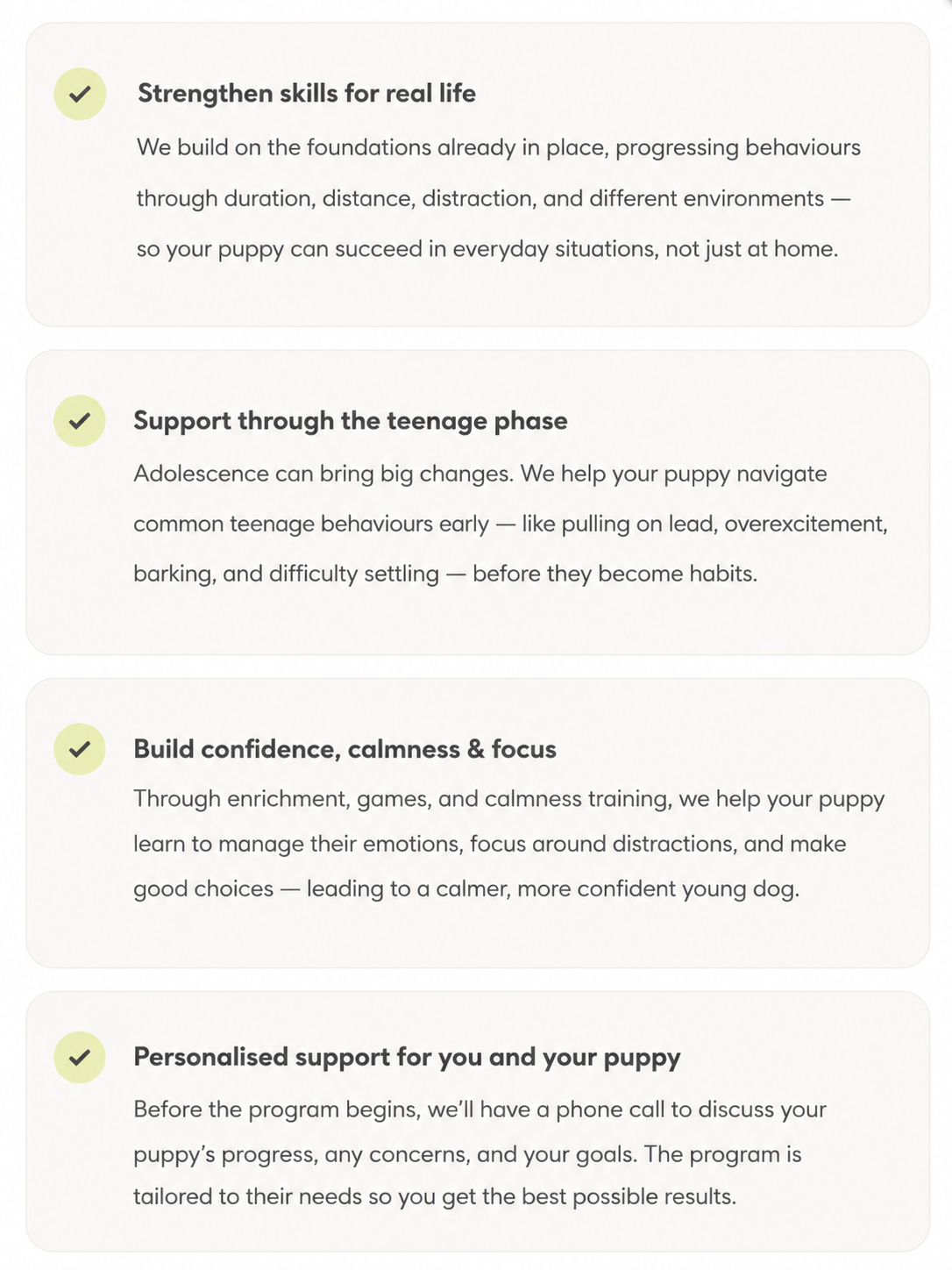
Strengthening Foundation Behaviours
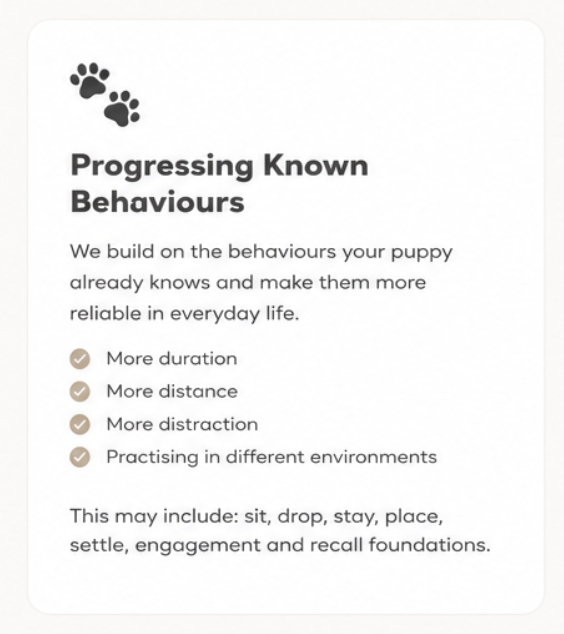
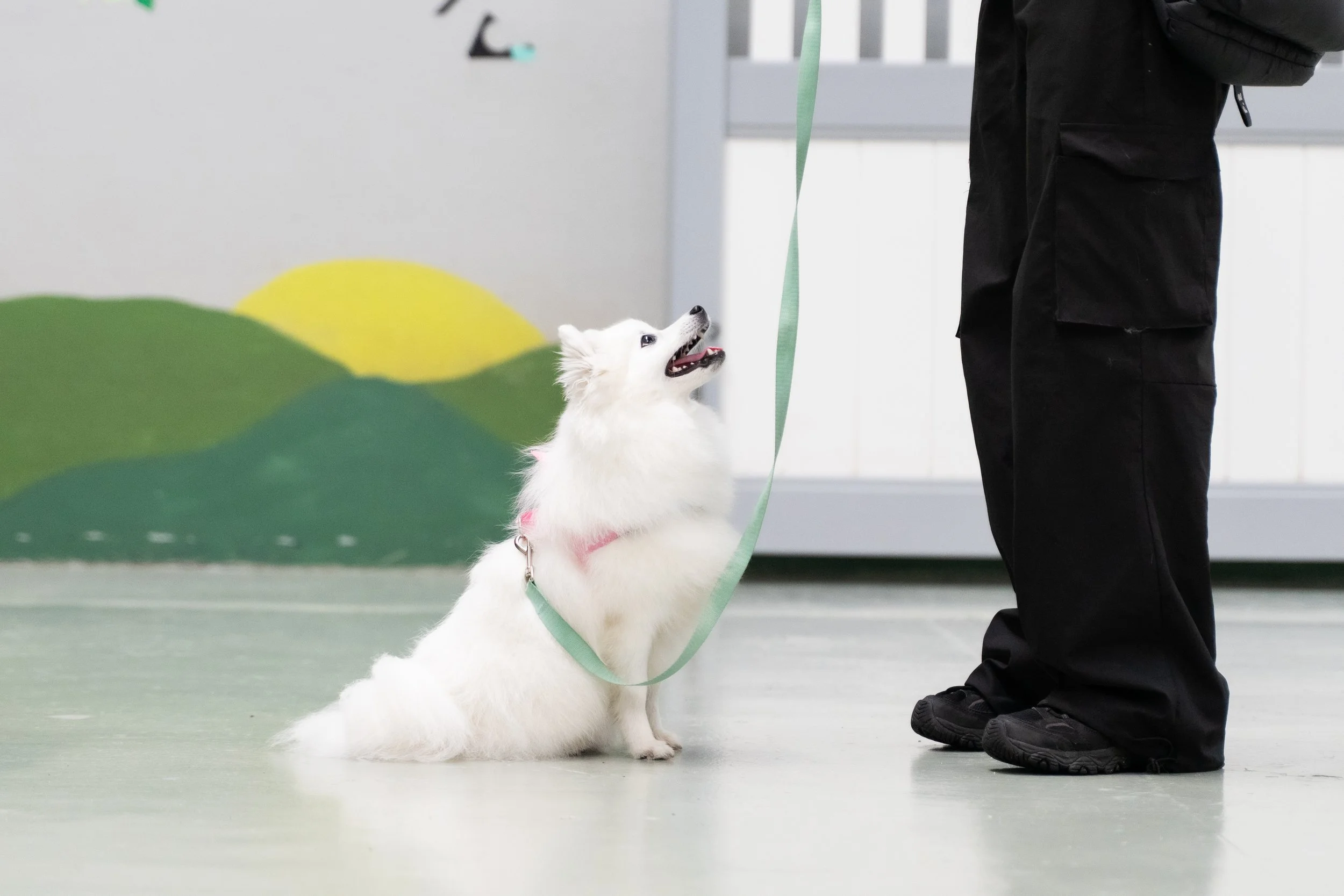
By this stage, many puppies already know cues like sit, drop, stay, place, and settle. The challenge is no longer whether they can do them, but whether they can still do them when life gets more distracting.
The Progression Program focuses on building those known behaviours into practical, reliable skills by working through more duration, more distance, more distraction, and more practice in different environments.
This is what turns training from something a puppy can do at home into something they can carry into everyday life.
For owners, this means a dog who listens more consistently, understands expectations more clearly, and is easier to guide through normal daily situations.
Real Life Walking and Everyday Skills
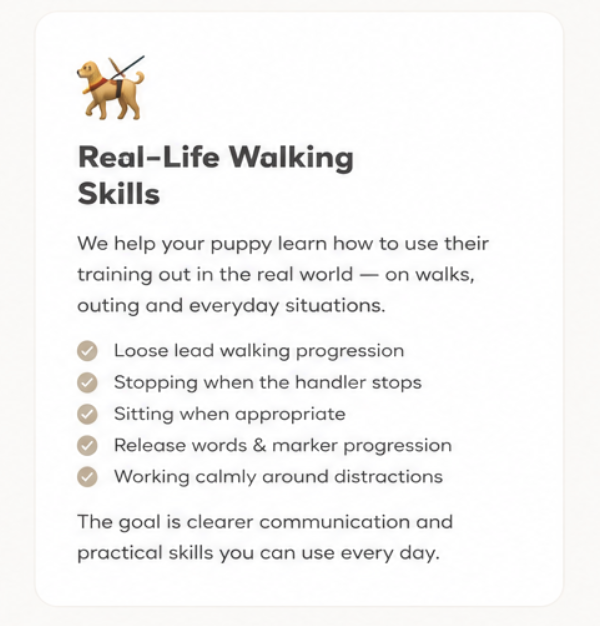
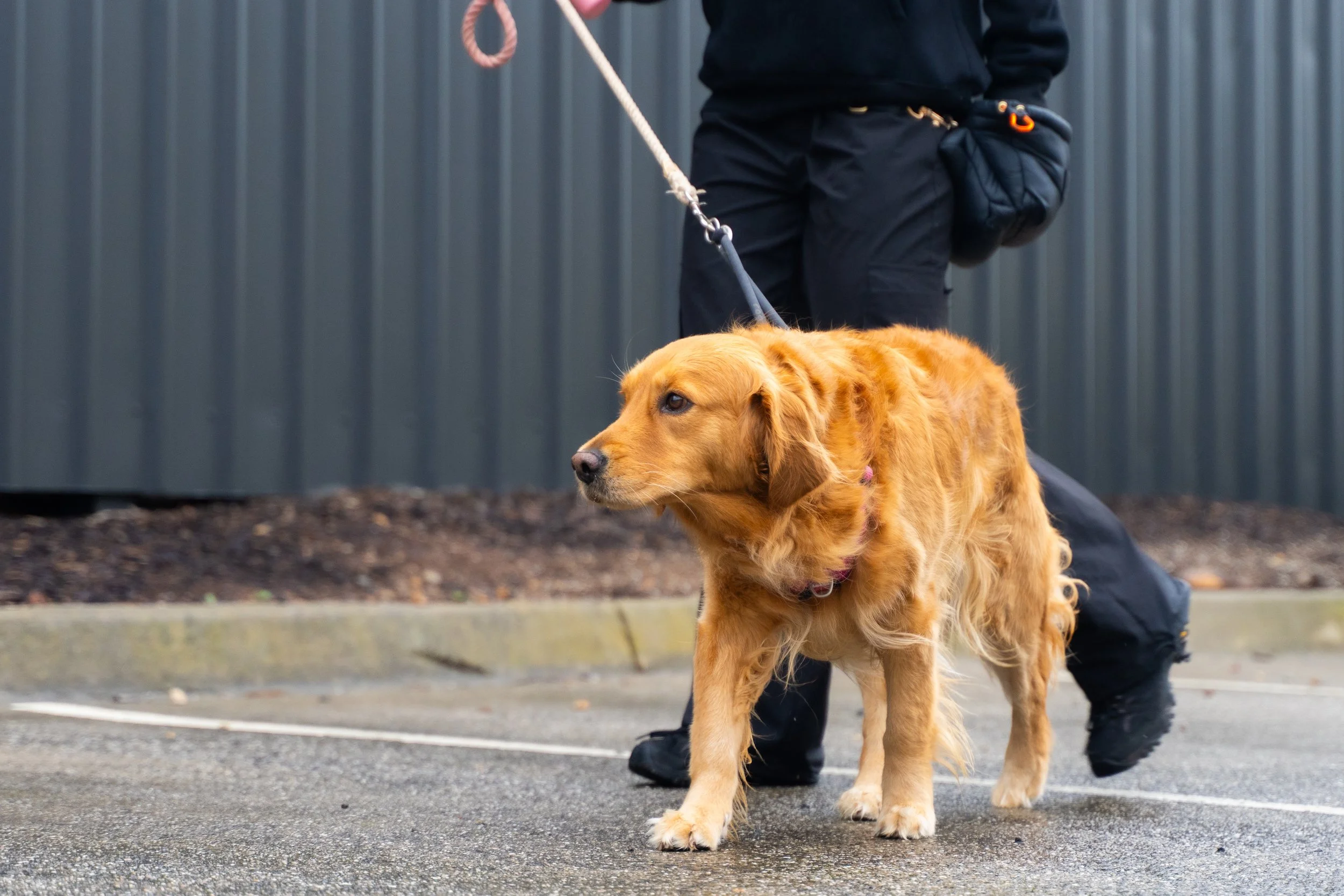
As puppies mature, they need to learn how to apply their training outside of simple practice sessions. This is often the stage where owners start noticing pulling on lead, losing focus on walks, excitement around movement, and difficulty staying connected in more stimulating environments.
The program works on practical walking skills such as loose lead walking progression, stopping when the handler stops, calm check-ins, release words, clearer marker systems, and using rewards more effectively to support thoughtful behaviour.
The aim is not just better training sessions, but better everyday outings.
For you, this means walks that feel calmer, clearer, and more enjoyable and a puppy who is learning how to move through the world with more focus and less chaos.
Calmness, Confidence, and Emotional Regulation
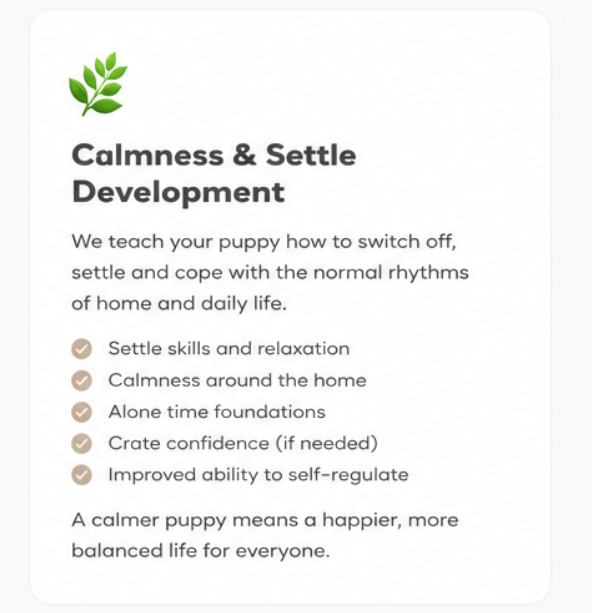
Adolescence is not just about obedience. It is also a major stage of emotional development. Puppies at this age are often more sensitive to their environment, quicker to become overexcited, and less able to regulate themselves when things feel stimulating or frustrating.
This part of the program focuses on helping puppies slow down, settle, cope with change, and recover more easily from excitement. We continue building calm behaviour as a genuine skill, not something simply expected, while also supporting confidence in new environments and around everyday challenges.
This means a dog who can cope better with real life, settle more easily at home, and move through novelty without becoming overwhelmed.
Enrichment and Appropriate Outlets
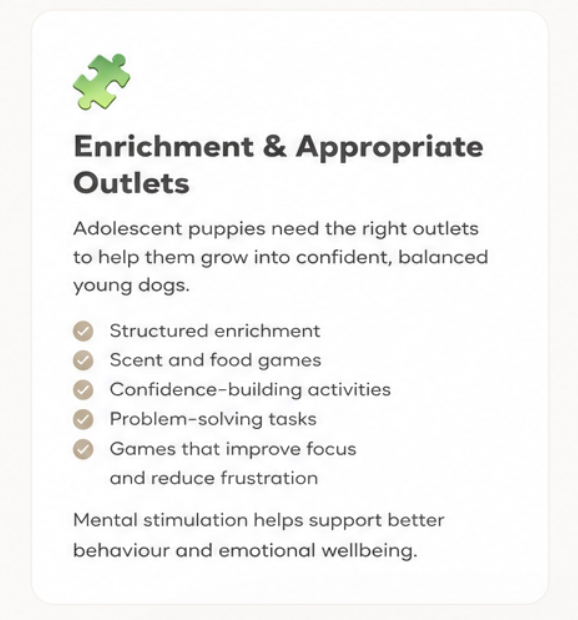
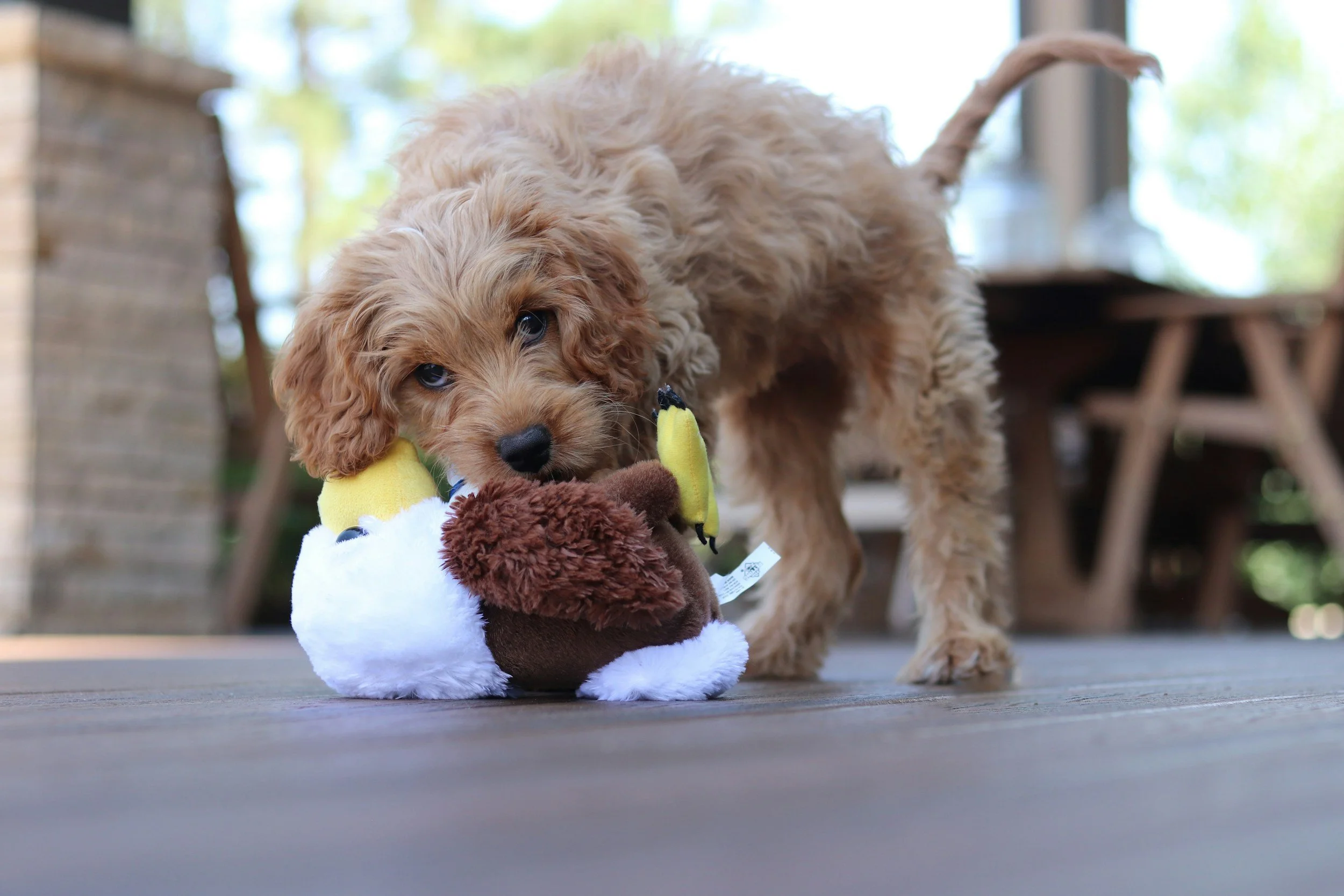
At this age, puppies need more than exercise alone. They need appropriate ways to use their brains, their energy, and their growing confidence.
The Progression Program includes structured enrichment, scent and food games, problem-solving tasks, and confidence-building activities that help puppies focus, regulate, and engage in more appropriate ways.
This is especially important during adolescence, when unmet needs often show up as barking, frustration, overarousal, or difficulty switching off.
Leading to better outlets for your dog, more purposeful ways to support behaviour at home, and a puppy who is learning how to use their energy in healthier ways.
Support for Teenage Behaviours
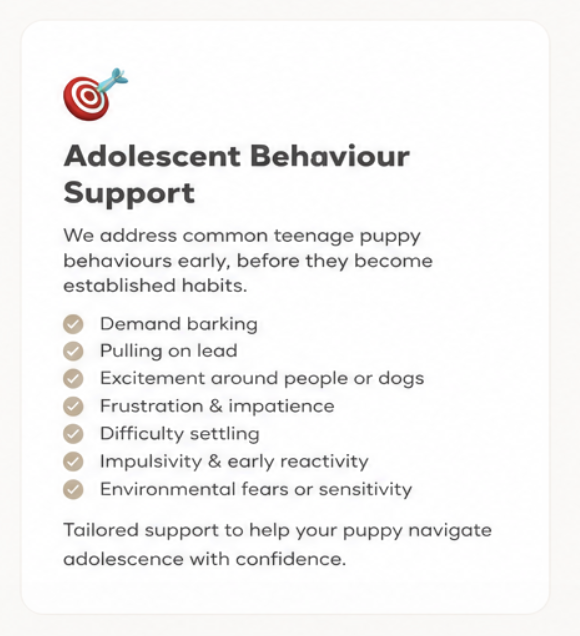
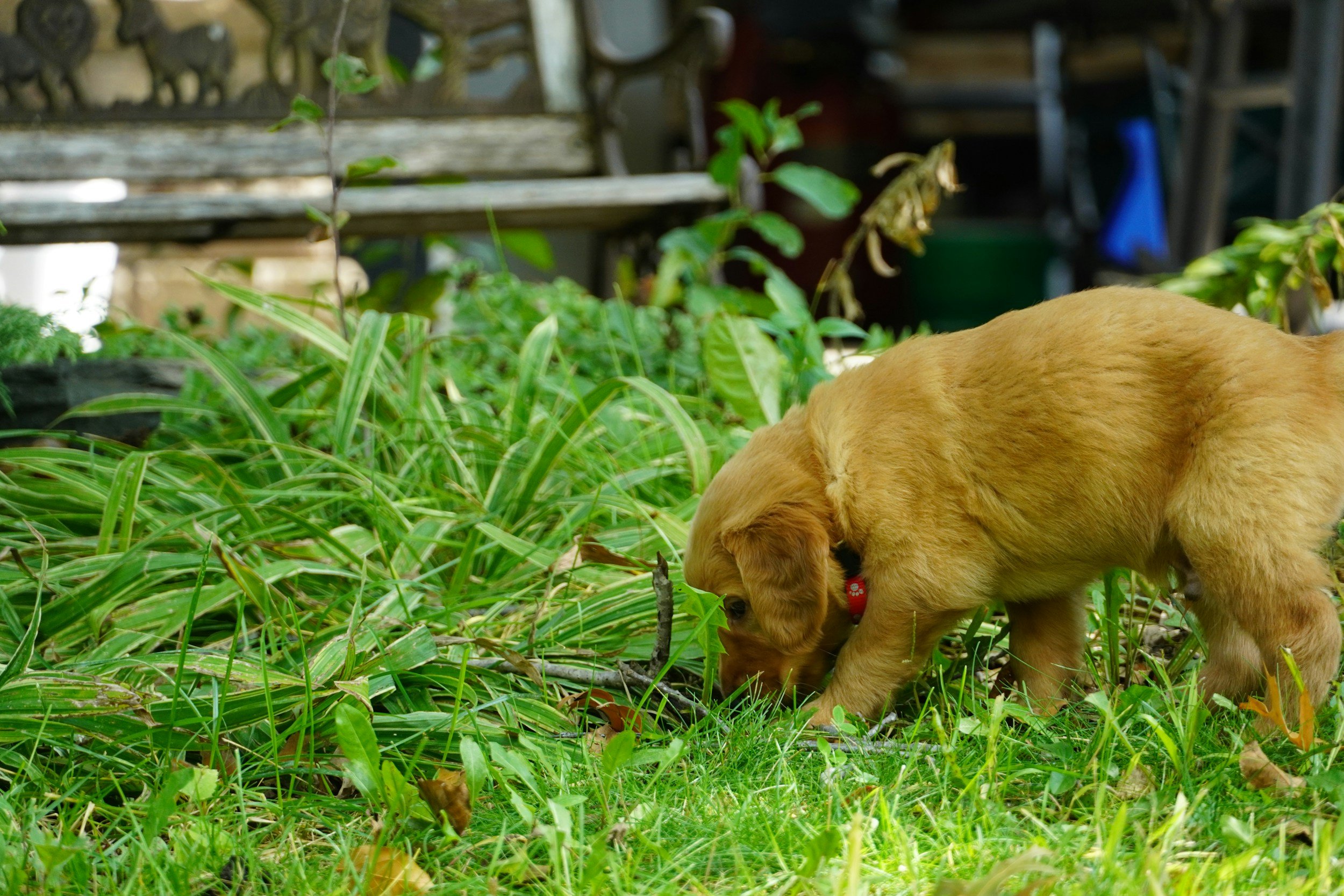
This is often the stage where owners begin to notice behaviour changes that were not there before. Pulling on lead, barking for attention, overexcitement around people or dogs, impulsive behaviour, frustration, and difficulty settling are all common during adolescence.
The program is designed to address these behaviours early, before they become stronger habits. Where needed, the stay can be tailored to support specific concerns such as emerging reactivity, environmental sensitivity, fear periods, or difficulties with calmness and focus.
For owners, this means support at the stage it matters most while behaviours are still developing and easier to guide in the right direction.
Personalised Guidance for Your Puppy
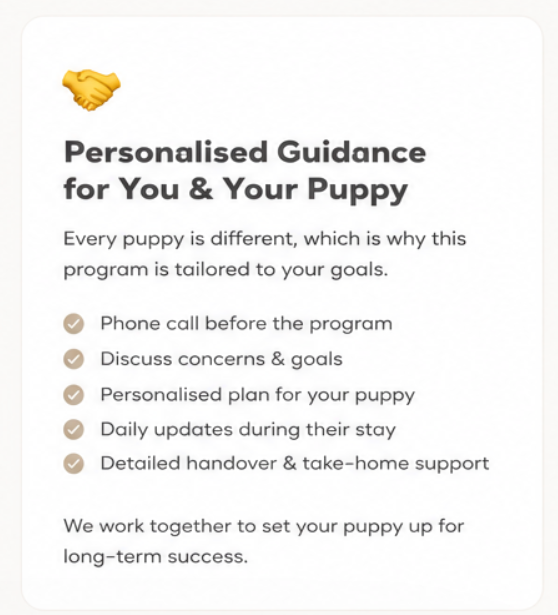
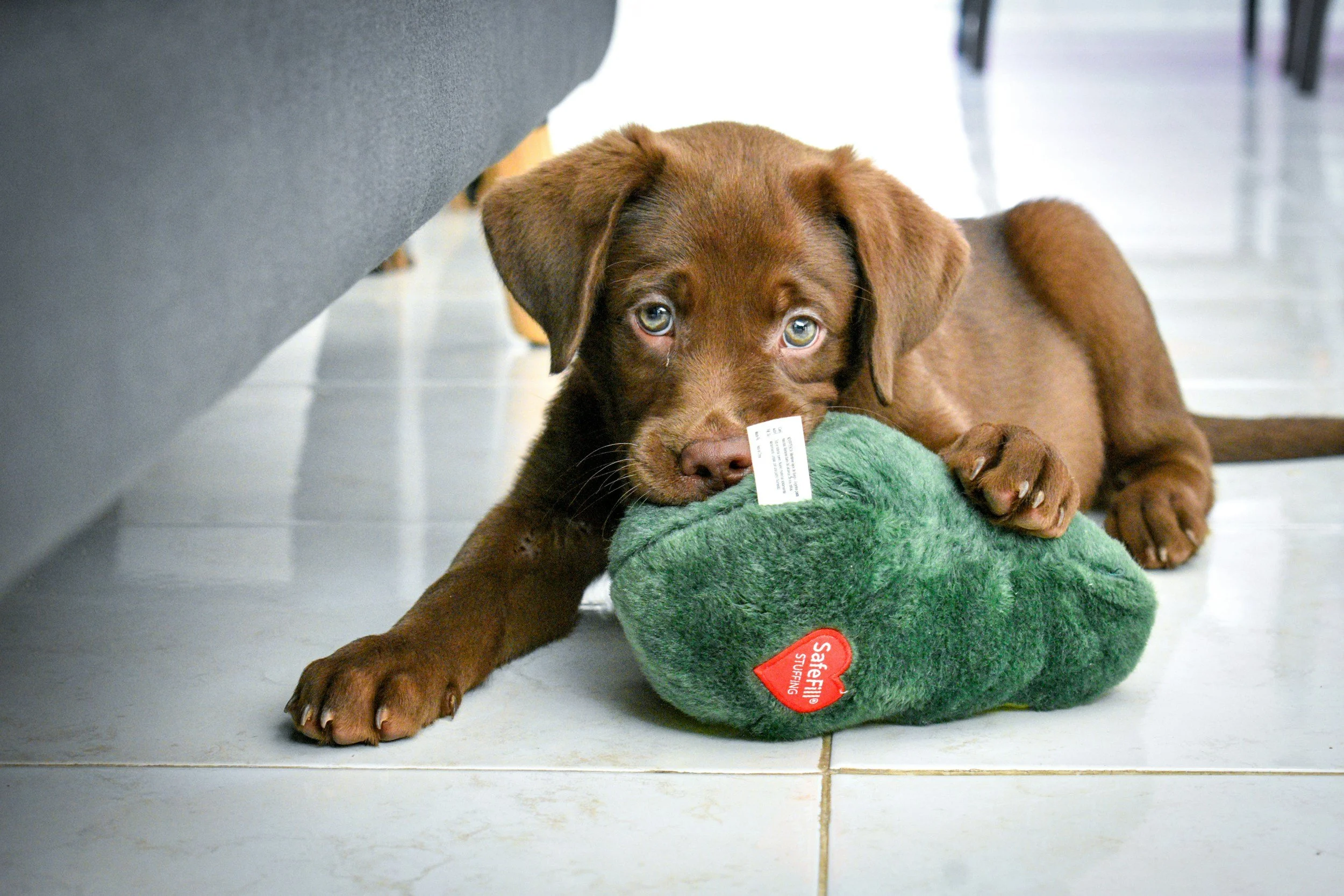
No two puppies move through adolescence in exactly the same way. Some need more help with walking skills, some with calmness, some with confidence, and some with the early signs of teenage behaviour changes.
Before the program begins, we will have a phone call to discuss how your puppy has been progressing, any concerns you have noticed, and what goals matter most to you. From there, the program is tailored to suit your puppy’s individual needs so the training is relevant, practical, and supportive of the stage they are in.
For owners, this means you are not getting a generic stay you are getting a program shaped around your puppy and your real life goals.

You Won't Be Left to Figure It Out Alone
Just like the Puppy Development Program, the support does not end when your puppy comes home.
You will receive handover guidance, recommendations for continuing the work at home, and practical support so you feel confident carrying the progress forward. The aim is not just short-term improvement during the stay, but lasting change that owners can understand and maintain.


An Investment in Guidance Through Adolescence, Not Just Training
The adolescent stage is where many of the early foundations begin to get tested.
This program is designed to guide your puppy through that next stage so you’re not left trying to manage pulling, barking, overexcitement, or frustration on your own later on.
Why Continued Support Matters
The 4–6 month stage is often when puppies become more independent, more distracted by the environment, and more likely to test boundaries. It is a very normal part of development, but it is also where many owners begin to notice changes in behaviour.
When puppies receive the right guidance during this stage, it helps strengthen the work already started and prevents those common teenage behaviours from becoming stronger habits. This can make a significant difference to walking, settling, focus, confidence, and everyday life at home.
Rather than waiting until behaviours feel overwhelming, the Puppy Progression Program is designed to step in early, build more reliability, and support puppies as they move through adolescence with better structure, communication, and calmness.
What You’re Really Paying For
You are not just paying for training sessions. You are investing in 14 days of personalised support, structured practice, behaviour guidance, and practical progression during the stage where many puppies begin to change the most.
This is the stage that shapes how they cope with distraction, excitement, frustration, and growing independence in the months ahead.
Early support is easier than undoing rehearsed teenage behaviours later
Foundations strengthened now become more reliable in everyday life
Your puppy comes home with clearer habits and better structure
You come home informed, supported, and confident continuing the work